
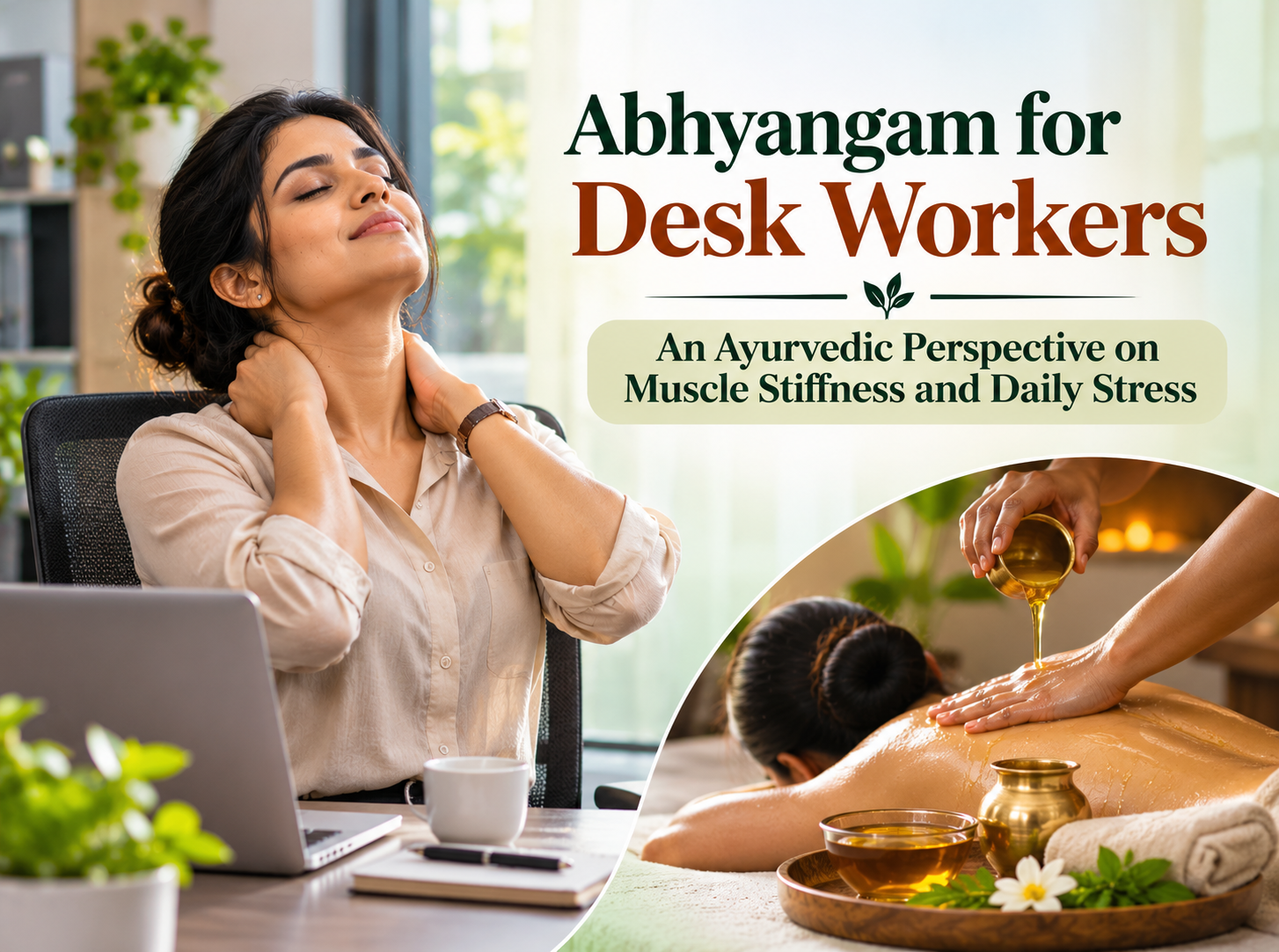
Spending long hours at a desk has become a normal part of modern working life. Whether working from an office or home, prolonged sitting, continuous computer use and limited physical movement can gradually contribute to muscle stiffness, physical discomfort and mental fatigue.
Many desk workers experience tight shoulders, lower back discomfort, heavy legs or a general feeling of tiredness after completing their workday. Although these symptoms may initially seem minor, repeated periods of inactivity and unsuitable workstation arrangements can affect everyday comfort and mobility.
Ayurveda offers a traditional perspective on maintaining physical balance through daily routines, appropriate movement and therapeutic oil massage. One such practice is Abhyangam, an Ayurvedic oil massage traditionally used to promote relaxation, nourish the skin and support overall wellbeing.
Understanding how Abhyangam fits into a balanced lifestyle can help desk workers explore complementary approaches to managing everyday stiffness and stress.
The human body is designed for regular movement. However, office routines often involve sitting in one position for several hours.
When muscles remain relatively inactive or maintain the same position for prolonged periods, they may become uncomfortable or feel stiff.
Several factors contribute to these symptoms.
Remaining seated for extended periods can reduce opportunities for normal movement and place sustained demands on certain muscle groups.
Desk workers may notice stiffness around the hips, lower back and shoulders, particularly after long working sessions.
An unsuitable chair, incorrect screen height or poorly positioned keyboard can encourage awkward postures.
Over time, these working positions may contribute to muscle fatigue and discomfort.
Typing, mouse use and other repetitive activities may place repeated demands on the muscles and tendons of the hands, wrists, arms and shoulders.
People who spend most of their working day sitting may struggle to maintain regular exercise routines.
Reduced physical activity can affect muscle conditioning, flexibility and overall physical fitness.
Deadlines, continuous meetings and demanding workloads can increase mental stress.
Some individuals also experience muscle tension, headaches or disturbed sleep during stressful periods.
These factors often occur together, making it important to consider both physical and lifestyle-related influences.
Ayurveda considers health through the relationship between the body, mind, daily habits and individual constitution.
Traditional Ayurvedic practitioners may assess muscle stiffness by considering factors such as physical activity, sleep patterns, stress, digestion and Dosha-related characteristics.
In Ayurveda, Vata Dosha is traditionally associated with movement and qualities such as dryness, lightness and mobility.
When individuals experience stiffness, dryness or discomfort, Ayurvedic practitioners may consider Vata-related patterns as part of their assessment.
However, Vata imbalance is a traditional Ayurvedic interpretation rather than a medically established cause of muscle stiffness.
Ayurveda emphasises balanced activity and consistent daily routines.
Prolonged inactivity may be considered inconsistent with maintaining healthy movement and physical balance.
In modern healthcare, regular movement is also recognised as important for musculoskeletal health.
Ayurveda traditionally considers mental and physical wellbeing closely connected.
Persistent stress may influence sleep, muscle tension and overall comfort.
Relaxation practices, adequate rest and appropriate physical activity can therefore be useful parts of a broader wellbeing routine.
Abhyangam is a traditional Ayurvedic massage practice involving the application of oil to the body using specific massage techniques.
Depending on the individual's needs and the practitioner's assessment, the massage may involve warmed oils and a structured sequence of strokes.
Traditional Ayurvedic practice considers Abhyangam an important component of body care and, in some contexts, Dinacharya or daily routine.
The treatment is commonly associated with:
Relaxation and a sense of calm
Skin moisturisation through oil application
Temporary relief from everyday muscle tension
General physical comfort
A structured period of rest and self-care
The experience and response to massage vary between individuals.
Although massage may provide short-term relief from some forms of muscle discomfort, evidence specifically supporting Abhyangam for treating occupational musculoskeletal disorders remains limited.
It should not replace medical assessment or rehabilitation when these are required.
For people experiencing everyday stiffness and stress from prolonged desk work, Abhyangam may offer a relaxing addition to their self-care routine.
After several hours of sitting and concentrating on work, muscles may feel tense or uncomfortable.
A gentle, professionally administered oil massage may help individuals relax and experience temporary relief from muscle tension.
This can be particularly appealing after demanding workdays.
Some individuals experience a sense of improved comfort following massage.
Abhyangam involves rhythmic massage movements that may help reduce the perception of tightness in certain muscle groups.
However, massage does not correct underlying joint conditions, nerve compression or structural problems.
Massage provides an opportunity to step away from work-related demands and focus on relaxation.
A calm treatment environment and gentle touch may help reduce perceived stress for some individuals.
Abhyangam can therefore complement other stress-management practices, including adequate sleep, regular exercise and relaxation techniques.
Oil application can help moisturise the skin and reduce dryness.
The choice of oil should consider individual skin sensitivity, allergies and other relevant health conditions.
Desk workers often postpone rest and physical wellbeing because of professional responsibilities.
Scheduling time for appropriate self-care may encourage greater awareness of physical discomfort and the need for balanced routines.
Although discomfort varies between individuals, certain areas are frequently affected by prolonged sitting and computer use.
| Body area | Common desk-related concern |
|---|---|
| Neck | Tightness associated with sustained screen viewing |
| Shoulders | Muscle tension from prolonged arm positioning |
| Upper back | Discomfort related to sustained postures |
| Lower back | Stiffness after extended sitting |
| Hips | Reduced movement and feelings of tightness |
| Legs | Heaviness or discomfort after prolonged inactivity |
| Wrists and forearms | Discomfort associated with repetitive keyboard and mouse use |
Abhyangam may be considered for general relaxation and comfort, but the appropriate approach depends on the individual's health.
Persistent pain, numbness, weakness or symptoms that interfere with daily activities require professional evaluation rather than massage alone.
Ayurveda places importance on Dinacharya, a consistent daily routine intended to support physical and mental wellbeing.
For desk workers, practical lifestyle changes may be more beneficial when maintained regularly rather than followed occasionally.
A short walk, comfortable stretching or suitable yoga practice can help introduce movement into the morning routine.
Choose activities that match your physical abilities and avoid movements that cause pain.
Instead of remaining seated for several hours continuously, stand up and move periodically.
Walking briefly, changing position and performing gentle movements can help interrupt prolonged sitting.
Adjust your chair, screen and keyboard to support a comfortable working position.
Keep frequently used items within easy reach and avoid unnecessarily strained postures.
Regular walking, strength exercises and other suitable activities can support muscle conditioning and overall health.
Massage may complement these habits, but it cannot provide the same benefits as regular physical activity.
Adequate sleep supports physical recovery, concentration and emotional wellbeing.
Maintaining regular sleeping and waking times can be helpful for desk workers experiencing fatigue and stress.
Breathing exercises, meditation and other calming practices may help manage work-related stress.
These approaches can be included alongside appropriate massage and movement routines.
Abhyangam and conventional massage may share certain techniques, but their traditional frameworks differ.
Abhyangam is rooted in Ayurvedic principles and typically involves oil application selected according to the practitioner's assessment.
A conventional massage may focus on relaxation, muscle tension or specific soft-tissue concerns using a variety of techniques.
The main differences may include:
Traditional framework: Abhyangam follows Ayurvedic concepts, while other massage approaches may use different therapeutic models.
Oil application: Oil is generally a central feature of Abhyangam.
Individual assessment: Ayurvedic practitioners may consider constitution, lifestyle and traditional Dosha-related patterns.
Treatment approach: The duration, pressure and techniques may vary according to the individual and provider.
Neither approach should be assumed to treat an underlying medical condition without appropriate evidence and diagnosis.
Although massage is generally well tolerated by many people, it may not be appropriate for everyone.
Consult a qualified healthcare professional before undergoing massage if you have:
Recent fractures or acute injuries
Significant swelling or inflammation
Suspected blood clots or a history of deep vein thrombosis
Active skin infections or open wounds
Severe or unexplained pain
Certain cardiovascular or circulatory conditions
Recent surgery
Unexplained neurological symptoms
Massage should not be applied over areas where it could worsen an existing condition.
Inform the practitioner about relevant medical conditions, allergies, medications and current symptoms before treatment.
Occasional muscle stiffness after prolonged sitting may improve with movement and changes to daily habits.
However, some symptoms require medical evaluation.
Seek professional advice if you experience persistent or worsening pain, repeated numbness, tingling, weakness or discomfort that affects sleep and everyday activities.
Sudden weakness, loss of bladder or bowel control, severe pain following injury or other rapidly developing neurological symptoms require urgent medical attention.
Early assessment can help identify conditions that may require physiotherapy, medication or other appropriate treatment.
Desk-related discomfort can vary depending on working hours, physical activity, existing health conditions and individual lifestyle habits.
A personalised Ayurvedic consultation may consider these factors before recommending suitable traditional therapies or supportive lifestyle practices.
At Dr. Raniya Sulthana Ayurveda Multi-Speciality Clinic, individuals interested in Ayurvedic body care can explore the traditional practice of Abhyangam as part of a broader approach to relaxation and wellbeing.
To learn more about the therapy, visit the clinic's Abhyangam Ayurvedic Oil Massage service page.
Professional assessment is particularly important for individuals with persistent pain, neurological symptoms or diagnosed musculoskeletal conditions.
Modern desk-based work often involves long hours of sitting, repetitive movements and continuous mental concentration. Over time, these habits can contribute to muscle stiffness, physical discomfort and everyday stress.
Ayurveda offers a traditional perspective on maintaining balance through Abhyangam, Dinacharya, appropriate movement and consistent self-care practices.
Abhyangam may provide relaxation and temporary relief from everyday muscle tension, while regular exercise, suitable workstation arrangements and adequate sleep remain important for long-term musculoskeletal wellbeing.
For individuals seeking traditional Ayurvedic oil massage and personalised lifestyle guidance in Chennai, Dr. Raniya Sulthana Ayurveda Multi-Speciality Clinic provides an opportunity to explore Abhyangam as a complementary wellbeing practice.
First Floor, Somanathapuram, Door No 4, 11B, Paper Mills Road, near Square Brothers Xerox, Kolathur, Tamil Nadu 600099.
First Floor, 241, Poonamallee High Rd, Maduravoyal, Chennai, Tamil Nadu 600095.
No. 63, HIG1, Ground Floor, Mogappair West Main Road, Nolambur, Chennai, Tamil Nadu 600037.

Copyrights All Rights Reserved Dr. Raniya Sulthana Ayurveda Multispeciality Clinic | Website Designed & Developed By GlintCreatives.com