
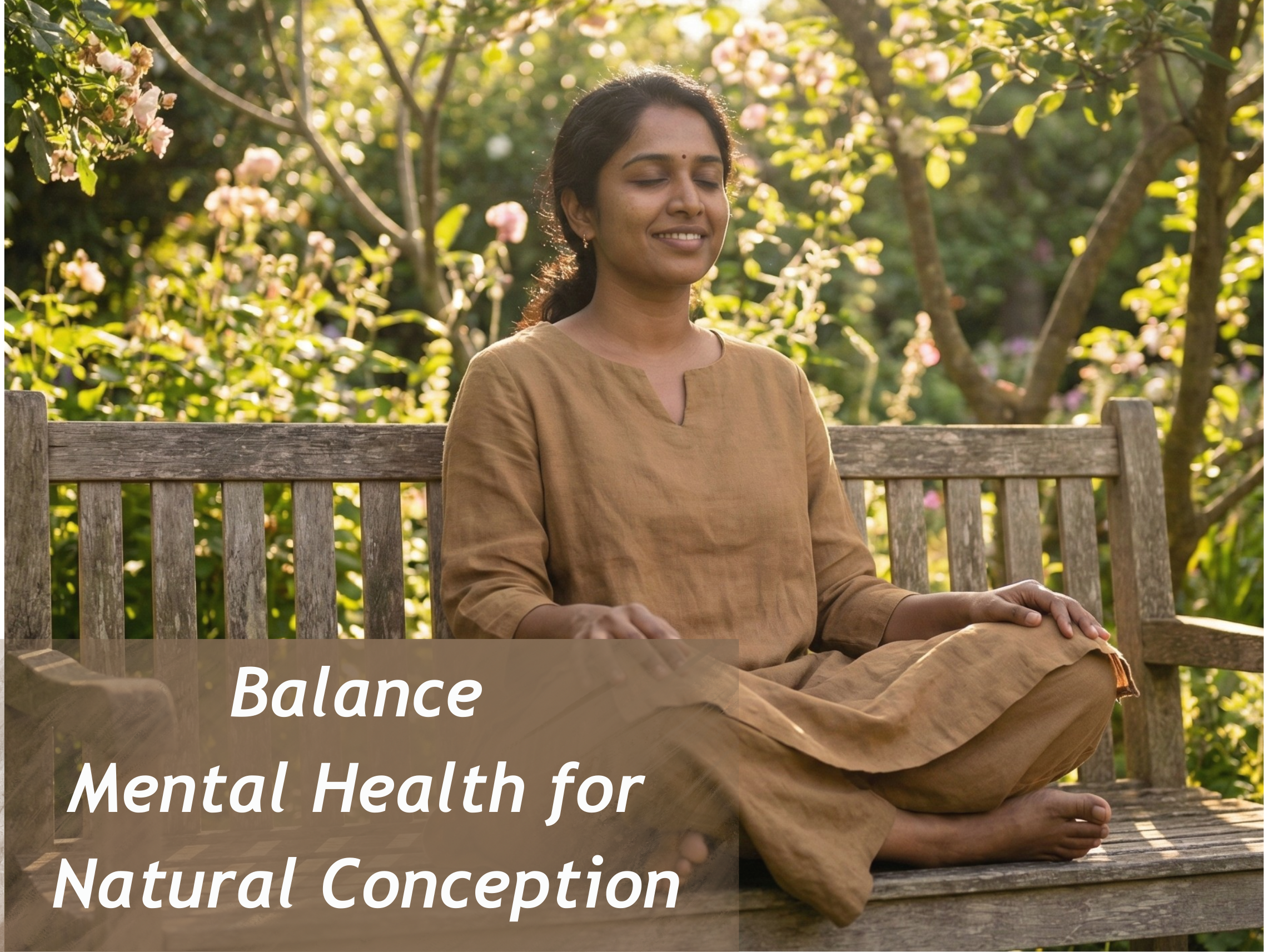
Natural conception depends on more than healthy organs and balanced hormones. Mental health plays a central role in preparing the body for pregnancy. Ayurveda recognizes the mind as a governing force that regulates hormonal rhythm, reproductive tissue nourishment, digestion, sleep, and emotional resilience. An Dr. Raniya Sulthana Ayurveda Multi-Speciality Clinic therefore approaches conception by first stabilizing mental health to support the body’s natural reproductive intelligence.
In short: Mental health affects fertility by regulating stress hormones, digestion, sleep cycles, and reproductive tissue quality. A calm, emotionally balanced mind improves hormonal predictability and physiological receptivity, creating supportive conditions for natural conception.
Mental health influences fertility through the neuroendocrine system. Chronic psychological stress elevates cortisol secretion. Elevated cortisol suppresses gonadotropin-releasing hormone activity. Reduced gonadotropin-releasing hormone disrupts ovulation in women and sperm production in men. Ayurveda describes this disruption as aggravated Vata dosha affecting reproductive channels.
Balanced mental health stabilizes cortisol levels. Stable cortisol supports luteinizing hormone and follicle-stimulating hormone coordination. Hormonal coordination improves ovulation quality and sperm vitality. Mental equilibrium therefore functions as a prerequisite for natural conception rather than a secondary factor.
Psychological stress activates the sympathetic nervous system. Sympathetic dominance reduces uterine blood flow and compromises endometrial receptivity. Reduced endometrial receptivity lowers implantation potential. Ayurveda defines this state as obstruction of Artava Vaha Srotas.
Chronic anxiety also impairs digestion. Impaired digestion weakens Agni, the digestive-metabolic fire. Weak Agni reduces nutrient assimilation. Poor assimilation compromises Shukra Dhatu and Artava Dhatu formation. These reproductive tissues directly determine fertility outcomes. Many couples experience normal medical reports while this subtle imbalance continues unnoticed.
Ayurveda identifies the mind as Manas and mental strength as Satva. Manas governs emotional responses and stress processing. Disturbed Manas destabilizes doshas. Dosha imbalance alters reproductive tissue nourishment. This cascade explains why emotional instability often manifests as delayed or difficult conception.
Satvic mental states promote clarity, optimism, and hormonal harmony. Rajasic mental states increase restlessness, urgency, and hormonal fluctuation. Tamasic mental states reduce motivation, vitality, and reproductive confidence. Fertility-focused mental health therefore emphasizes Satva enhancement rather than suppression of emotions.
In holistic fertility practice, certain mental patterns appear repeatedly:
These patterns do not indicate failure. They signal the need for mental recalibration before the body can respond naturally.
Ayurvedic mental balance relies on structured daily routines. Consistency regulates circadian rhythm. Regulated circadian rhythm optimizes melatonin secretion. Melatonin supports ovarian function, sperm quality, and hormonal timing.
Meditation reduces sympathetic overactivity. Reduced sympathetic tone lowers cortisol secretion. Pranayama stabilizes oxygen delivery and calms neural pathways. Regular breath regulation improves uterine circulation, testicular function, and emotional steadiness.
Adequate sleep restores neuroendocrine balance. Nighttime rest regulates reproductive hormone pulses. Ayurveda recommends early sleep aligned with Kapha-dominant hours. Proper sleep timing strengthens reproductive tissue regeneration and mental resilience.
Unprocessed emotions create mental inertia. Mental inertia suppresses reproductive vitality and motivation. Ayurveda advises conscious emotional release through counseling, reflective writing, guided self-inquiry, and supportive conversation. Emotional clarity restores confidence and bodily trust.
Mental health depends on stable blood sugar and micronutrient sufficiency. Ayurveda prescribes warm, freshly prepared meals to stabilize the nervous system. Stable digestion supports serotonin synthesis. Balanced serotonin enhances mood regulation and reproductive readiness.
Healthy fats nourish brain tissue. Nourished brain tissue improves stress resilience. Reduced stress supports predictable hormonal signaling essential for conception. Mental nourishment therefore complements physical fertility care.
Mental health extends beyond the individual. Relationship harmony influences fertility outcomes. Emotional safety reduces subconscious stress responses. Reduced stress improves intimacy quality and hormonal synchrony between partners.
Ayurveda encourages shared routines, open communication, and synchronized sleep cycles. These practices align emotional rhythms and support natural conception without pressure.
Mental recalibration does not occur overnight. Nervous system regulation usually develops over several weeks. Reproductive tissue nourishment progresses gradually. Ayurveda emphasizes patience, consistency, and gentle correction rather than urgency. Reduced pressure itself often becomes the turning point
Excessive focus on outcomes can activate fear-based stress responses. Performance pressure keeps the nervous system in a guarded state. A guarded nervous system prioritizes survival over reproduction. Ayurveda therefore encourages intention without attachment and effort without fear
Use this reflection to assess mental readiness:
Gentle awareness of these questions often initiates healing
Persistent anxiety, emotional fatigue, or repeated conception delays suggest deeper imbalance. Dr. Raniya Sulthana Ayurveda Multi-Speciality Clinic assess mental constitution alongside physical health. Personalized therapies address root causes rather than isolated symptoms.
Mental health stabilization forms the foundation of natural conception. A calm mind supports balanced hormones, nourished reproductive tissues, and receptive physiology. Ayurveda restores this balance by aligning emotional clarity with biological readiness, creating supportive conditions for new life.
First Floor, Somanathapuram, Door No 4, 11B, Paper Mills Road, near Square Brothers Xerox, Kolathur, Tamil Nadu 600099.
First Floor, 241, Poonamallee High Rd, Maduravoyal, Chennai, Tamil Nadu 600095.
No. 63, HIG1, Ground Floor, Mogappair West Main Road, Nolambur, Chennai, Tamil Nadu 600037.

Copyrights All Rights Reserved Dr. Raniya Sulthana Ayurveda Multispeciality Clinic | Website Designed & Developed By GlintCreatives.com