
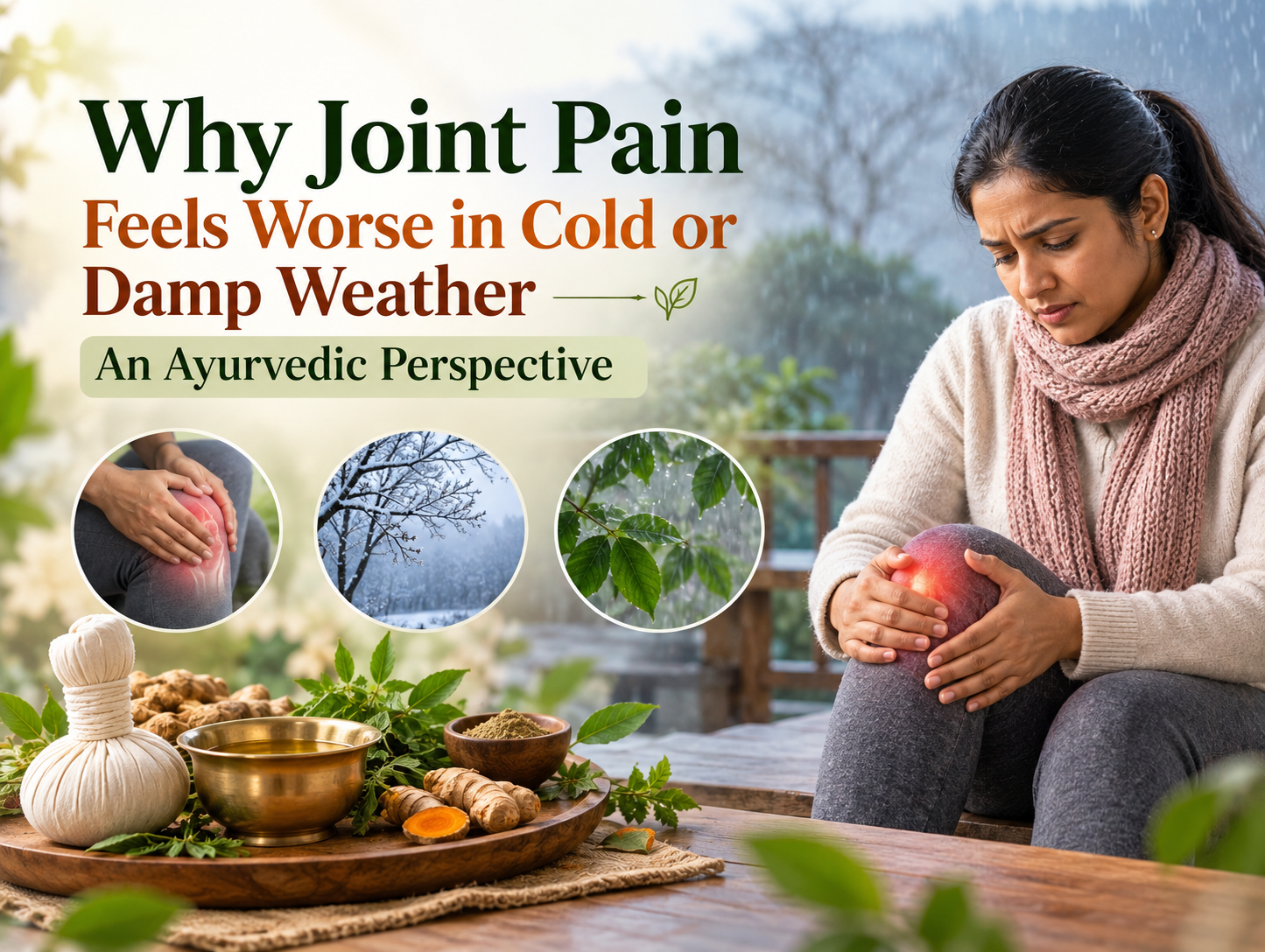
Have you ever noticed that your knees feel stiffer on a cold morning or an old joint problem seems more noticeable when the weather turns damp? Some people with arthritis or recurring joint discomfort report changes in their symptoms alongside changes in weather.
Joint pain is influenced by many factors, and weather does not affect everyone in the same way. From an Ayurvedic perspective, however, seasonal changes are considered important because qualities such as coldness, dryness and dampness can influence the balance of the Doshas and may contribute to stiffness and discomfort in susceptible individuals.
Understanding these seasonal influences can help you adapt your daily routine and joint-care habits accordingly.
There is no single explanation for why some people experience increased joint discomfort during colder or damp weather. Reduced physical activity, changes in daily routine and individual sensitivity may all play a role.
During colder days, people may naturally spend more time indoors and move less. Reduced movement can make already-stiff joints feel more noticeable, particularly after prolonged sitting or on waking in the morning.
People with existing conditions such as osteoarthritis, rheumatoid arthritis or previous joint injuries may also be more conscious of changes in joint comfort and mobility.
Persistent or worsening joint pain should not automatically be attributed to the weather. An appropriate medical assessment is important to identify the underlying cause.
Ayurveda describes Vata Dosha as having qualities that include coldness, dryness and mobility. Because cold and dry weather shares some of these qualities, Ayurveda traditionally considers such conditions capable of aggravating Vata in susceptible individuals.
Vata imbalance is commonly associated in Ayurvedic understanding with symptoms such as:
Joint stiffness
Dryness
Cracking or popping sensations
Variable or moving discomfort
Reduced flexibility
Discomfort that may feel more noticeable during cold conditions
This does not mean that every episode of joint pain is caused by Vata. Ayurvedic assessment considers the person's constitution, symptoms, lifestyle, digestion and other factors before determining an appropriate approach.
Damp and heavy environmental conditions are traditionally associated with Kapha qualities in Ayurveda.
When heaviness and coldness are prominent, some individuals may experience a sense of sluggishness or stiffness. For someone who already has reduced joint mobility, this may make movement feel more difficult.
The Ayurvedic approach therefore does not look only at whether the weather is “cold”. It considers whether the prevailing qualities are cold and dry, cold and damp, heavy or otherwise, alongside the individual's constitution and current condition.
One of the simplest approaches commonly used for stiffness is appropriate warmth.
A warm shower or bath may help some people feel more comfortable before beginning their daily activities. Warm clothing can also help protect sensitive joints when temperatures drop.
Ayurvedic practice may use different forms of therapeutic warmth depending on the individual's condition. However, heat is not suitable for every type of joint problem, particularly when there is significant acute swelling, redness or inflammation.
This is why treatment should be selected according to the condition rather than applying the same home remedy to every joint complaint.
Abhyanga, or therapeutic oil application, has an important place in Ayurvedic practice. Depending on the individual's condition, specific oils and techniques may be selected to support comfort, relaxation and mobility.
Warm oil application is traditionally considered particularly relevant where Vata qualities such as dryness and stiffness are prominent.
However, the choice of oil and whether oil application is appropriate should depend on the person's condition. Joint pain associated with acute inflammation may require a different approach from chronic stiffness.
For persistent joint problems, personalised Ayurvedic guidance is preferable to choosing oils solely based on general recommendations.
Cold weather often encourages people to become less active, but prolonged inactivity can contribute to stiffness.
Gentle, regular movement may help maintain flexibility and mobility. Depending on your health condition, this could include:
Walking
Gentle stretching
Joint mobility exercises
Yoga
Regular movement breaks during prolonged sitting
The appropriate intensity depends on the underlying joint condition, age and general health.
If movement causes sharp pain, significant swelling or worsening symptoms, professional assessment is advisable before continuing the exercise.
For many people with joint problems, stiffness is particularly noticeable after waking.
An Ayurvedic-inspired morning routine may include gradually warming the body, gentle movement and avoiding suddenly placing excessive strain on stiff joints.
Rather than immediately beginning strenuous activity, allowing the body a little time to become mobile can make the morning routine more comfortable.
Ayurveda's concept of Dinacharya, or daily routine, also emphasises consistency. Maintaining appropriate sleep, meals, activity and rest patterns may support overall wellbeing throughout changing seasons.
Ayurveda also considers food choices according to the season, individual constitution and digestive capacity.
During colder periods, warm and freshly prepared meals may be preferred over excessive quantities of cold foods for certain individuals. Appropriate hydration also remains important even when you do not feel as thirsty as you might during warmer weather.
However, there is no single “joint pain diet” suitable for everyone. Dietary advice should take into account existing medical conditions, medications and individual nutritional requirements.
It is easy to assume that recurring joint pain is simply due to age or weather. However, persistent joint symptoms can have many possible causes.
Consider seeking professional evaluation if you experience:
Persistent or progressively worsening joint pain
Significant swelling
Redness or warmth around a joint
Severe morning stiffness
Difficulty walking or performing normal activities
Pain following an injury
Numbness or weakness
Unexplained fever alongside joint symptoms
An accurate diagnosis helps determine whether symptoms are related to arthritis, an injury, inflammation, a spinal condition or another underlying problem.
Ayurvedic joint care is not simply about applying oil whenever a joint hurts. Treatment traditionally considers the Dosha involvement, nature of pain, presence of stiffness or swelling, digestion, lifestyle, age and overall health of the individual.
Depending on the assessment, an Ayurvedic practitioner may recommend personalised changes in daily routine, diet, therapeutic procedures, external applications or other supportive measures.
People experiencing recurring back, neck, spine or joint problems can learn more about the clinic's approach through Spine, Bone & Joint Disorders.
Ayurvedic care should complement appropriate medical evaluation, particularly for diagnosed arthritis, significant inflammation, injuries or progressive joint conditions.
Cold and damp weather does not affect everyone's joints in the same way. For those who do notice seasonal stiffness or discomfort, paying attention to warmth, regular movement, daily routine and appropriate professional care may help make seasonal changes easier to manage.
Ayurveda provides an individualised perspective by considering not only where discomfort occurs but also the qualities of the symptoms, the person's constitution, lifestyle and seasonal environment.
If joint stiffness or pain continues to interfere with everyday activities, a professional evaluation can help identify the underlying condition and determine an appropriate management plan at Dr. Raniya Sulthana Ayurveda Multi-Speciality Clinic.
First Floor, Somanathapuram, Door No 4, 11B, Paper Mills Road, near Square Brothers Xerox, Kolathur, Tamil Nadu 600099.
First Floor, 241, Poonamallee High Rd, Maduravoyal, Chennai, Tamil Nadu 600095.
No. 63, HIG1, Ground Floor, Mogappair West Main Road, Nolambur, Chennai, Tamil Nadu 600037.

Copyrights All Rights Reserved Dr. Raniya Sulthana Ayurveda Multispeciality Clinic | Website Designed & Developed By GlintCreatives.com