
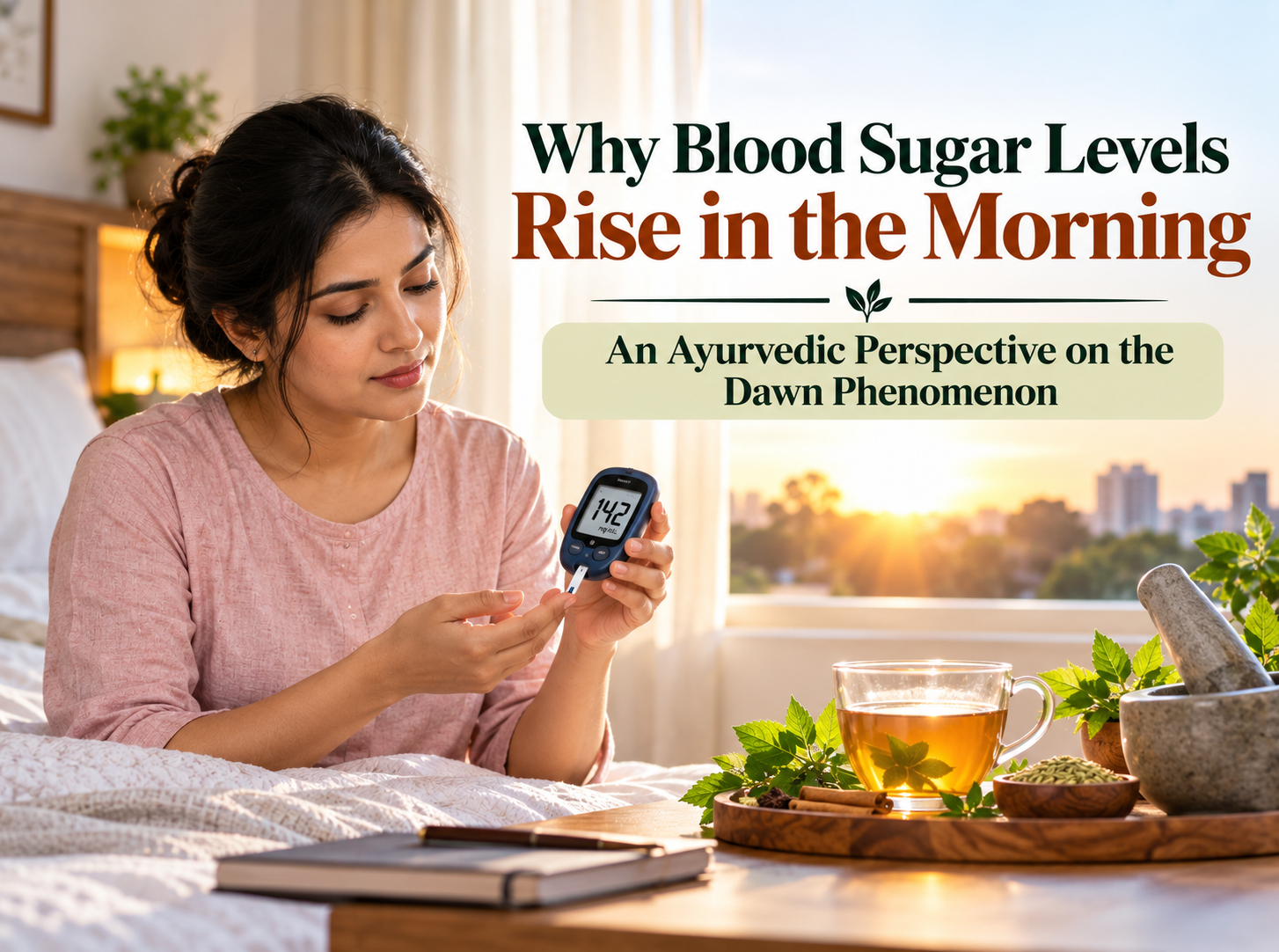
Have you ever checked your blood sugar level immediately after waking up and noticed that it is higher than expected, even though you have not eaten anything overnight? This can be confusing, especially for people who carefully follow their diet, take prescribed medication and maintain a healthy lifestyle.
One possible explanation is the dawn phenomenon, a natural hormonal process that can cause blood glucose levels to rise during the early morning hours. This effect is particularly noticeable in people with diabetes because their bodies may have difficulty regulating glucose effectively.
While modern medicine explains the dawn phenomenon through hormonal changes and insulin activity, Ayurveda offers a complementary perspective on metabolic balance, daily routines, digestion and lifestyle habits.
Understanding both approaches can help individuals recognise morning blood sugar patterns and make informed decisions about their health.
The dawn phenomenon refers to an increase in blood glucose levels during the early morning hours, often between approximately 3 a.m. and 8 a.m.
During this period, the body releases hormones that help prepare it for waking up and becoming active.
These include:
Cortisol
Growth hormone
Glucagon
Adrenaline
These hormones can encourage the liver to release glucose into the bloodstream and may temporarily reduce the body's sensitivity to insulin.
In people without diabetes, the pancreas generally produces enough insulin to maintain normal blood glucose levels.
However, individuals with diabetes may not produce sufficient insulin or may experience insulin resistance. As a result, blood sugar levels can rise before breakfast.
The dawn phenomenon does not necessarily mean that a person has eaten incorrectly or failed to follow their diabetes management routine.
Many people assume that blood glucose increases only after consuming carbohydrates or sugary foods. However, the body can produce and release glucose even during fasting.
The liver stores glucose in the form of glycogen and can release it when the body requires energy. It can also produce glucose through a process called gluconeogenesis.
During the early morning hours, hormonal changes signal the liver to make more glucose available.
For individuals with diabetes, the body's ability to regulate this glucose may be reduced.
Several factors can influence morning blood sugar readings, including:
Insulin resistance
Insufficient overnight insulin activity
Hormonal changes before waking
Late-night meals or snacks
Inadequate sleep
Stress
Illness or changes in medication
Because several factors can produce similar readings, repeated morning blood sugar elevations should be assessed rather than automatically attributed to the dawn phenomenon.
Ayurveda approaches health through the interconnected relationship between digestion, daily routine, sleep, physical activity and individual constitution.
Although classical Ayurvedic texts do not describe the dawn phenomenon as a modern medical diagnosis, traditional Ayurvedic principles may provide a supportive framework for developing healthier lifestyle habits.
In Ayurveda, Agni refers to the principle of digestion and transformation.
Balanced Agni is traditionally associated with effective digestion, nourishment and the body's ability to process food.
Ayurvedic practitioners may consider eating patterns, digestive symptoms and overall vitality when assessing an individual's metabolic wellbeing.
However, Agni is a traditional Ayurvedic concept and should not be considered medically equivalent to insulin secretion, glucose metabolism or pancreatic function.
For people with diabetes, blood glucose monitoring and appropriate medical treatment remain essential.
Dinacharya, or a structured daily routine, is an important aspect of Ayurvedic lifestyle practice.
Ayurveda traditionally encourages regular sleeping, waking, eating and activity patterns to support overall balance.
Maintaining consistent routines may also make it easier for people with diabetes to manage meals, physical activity, medication schedules and blood glucose monitoring.
The goal is to establish sustainable habits rather than follow an overly restrictive routine.
Traditional Ayurveda associates the early morning period with Kapha qualities such as heaviness, stability and slowness.
An Ayurvedic practitioner may consider these qualities when discussing morning lethargy, inactivity or daily routine.
However, Kapha is not the physiological cause of the dawn phenomenon. Morning glucose elevations are explained medically by hormonal changes, liver glucose production and insulin regulation.
Ayurvedic concepts can inform complementary lifestyle guidance without replacing this scientific understanding.
Not every high fasting glucose reading is caused by the dawn phenomenon.
Understanding the possible differences is important for appropriate diabetes management.
| Possible cause | What happens |
|---|---|
| Dawn phenomenon | Early morning hormonal changes increase glucose production and may reduce insulin sensitivity. |
| Insufficient overnight medication or insulin effect | Blood glucose may remain elevated or rise overnight because treatment is not providing adequate coverage. |
| Late-night eating | Food consumed before bedtime may contribute to higher glucose readings overnight or the following morning. |
| Overnight hypoglycaemia | Blood glucose falls too low during sleep. This requires attention, particularly in people using insulin or certain diabetes medicines. |
| Stress, illness or poor sleep | These factors may affect glucose regulation and contribute to higher readings. |
A rise in morning glucose following overnight hypoglycaemia is sometimes called the Somogyi effect, but evidence for a consistent rebound effect is limited.
Continuous glucose monitoring or appropriately timed overnight readings can help healthcare professionals identify the actual pattern.
Sleep plays an important role in metabolic health.
Insufficient or disturbed sleep may affect insulin sensitivity, appetite regulation and stress-related hormonal activity.
People who regularly sleep late, experience interrupted sleep or have inconsistent sleep schedules may find their blood glucose management more challenging.
Ayurveda traditionally emphasises Nidra, or sleep, as one of the important foundations of wellbeing.
Helpful sleep habits include:
Maintaining regular sleeping and waking times
Creating a comfortable sleeping environment
Reducing unnecessary screen exposure before bedtime
Avoiding heavy meals immediately before sleeping
Practising gentle relaxation techniques
Seeking medical evaluation for persistent snoring or suspected sleep apnoea
Good sleep habits can support overall metabolic health, although they do not necessarily eliminate the dawn phenomenon.
A balanced lifestyle is an important part of diabetes care.
Ayurveda offers several traditional practices that may complement medically recommended approaches to glucose management.
Regular meal patterns can make it easier to understand how food influences blood glucose levels.
Instead of skipping meals or following extreme dietary restrictions, focus on balanced eating habits appropriate to individual nutritional needs.
People taking insulin or medicines that can cause low blood sugar should discuss major changes in meal timing with their healthcare professional.
A diabetes-friendly eating pattern generally includes appropriate portions of:
Non-starchy vegetables
Whole grains and other fibre-rich carbohydrates
Pulses and legumes
Suitable protein sources
Healthy fats
Fruits in appropriate portions
Ayurveda traditionally encourages mindful eating and attention to individual digestive comfort.
However, no single food or Ayurvedic dietary pattern can reliably prevent the dawn phenomenon in everyone.
Physical activity can improve insulin sensitivity and support overall metabolic health.
Walking, gentle yoga and other suitable forms of exercise may be beneficial when practised consistently.
Some individuals may find that activity after meals supports post-meal glucose management.
The effect of exercise on overnight and morning glucose varies, particularly among people using insulin or other glucose-lowering medicines.
Stress can influence glucose regulation through hormonal and behavioural changes.
Ayurvedic lifestyle practices such as meditation, gentle breathing exercises and relaxation may help individuals manage everyday stress.
These practices should be viewed as supportive measures rather than treatments that directly correct morning glucose elevations.
Drinking sufficient water supports normal bodily functions and general wellbeing.
However, hydration alone does not correct elevated blood glucose or replace diabetes treatment.
Traditional Ayurveda includes various herbal preparations in its approach to metabolic wellbeing.
However, evidence for the effectiveness and safety of individual Ayurvedic herbs in managing the dawn phenomenon is limited.
Some herbal products may interact with prescribed diabetes medicines, increase the risk of hypoglycaemia or contain ingredients that require additional safety consideration.
Therefore, individuals should not begin herbal supplements or change diabetes medication without guidance from qualified healthcare professionals.
Ayurvedic care should complement, not replace, prescribed diabetes treatment, regular blood glucose monitoring or medical follow-up.
If fasting blood sugar levels are frequently higher than expected, keeping a structured record may help identify possible contributing factors.
Useful information to record includes:
Blood glucose before bedtime
Blood glucose immediately after waking
Dinner and evening snack timings
Medication or insulin timings
Sleep duration and quality
Physical activity during the previous day
Any symptoms of overnight low blood sugar
A healthcare professional may recommend continuous glucose monitoring or selected overnight glucose checks when appropriate.
Do not adjust insulin doses or diabetes medicines independently based on a few morning readings.
For people experiencing repeated morning elevations, a medical review can help determine whether the dawn phenomenon, overnight glucose patterns or another factor is responsible.
Diabetes management involves more than monitoring a single blood sugar reading. Daily routines, eating habits, physical activity, sleep and stress can all influence long-term wellbeing.
Ayurvedic consultations traditionally consider an individual's constitution, digestive patterns, lifestyle habits and overall health when developing supportive recommendations.
At Dr. Raniya Sulthana Ayurveda Multi-Speciality Clinic, individuals seeking complementary lifestyle guidance can explore approaches focused on balanced routines, appropriate dietary habits and general wellbeing.
Learn more about the clinic's Diabetes & Lifestyle Disease Management services and how personalised Ayurvedic lifestyle support may fit alongside conventional medical care.
Any Ayurvedic recommendations should be coordinated with existing diabetes treatment, particularly for individuals taking glucose-lowering medicines.
Occasional changes in fasting blood sugar can occur for several reasons. However, consistently elevated readings deserve medical attention.
Consult your healthcare professional if you experience:
Repeatedly high fasting blood glucose levels
Unexplained changes in blood sugar patterns
Frequent urination or excessive thirst
Unusual tiredness or weakness
Symptoms suggesting overnight low blood sugar
Difficulty maintaining glucose levels within your agreed target range
Seek urgent medical care for severe symptoms such as confusion, persistent vomiting, difficulty breathing or significant dehydration, particularly when blood glucose is very high.
A qualified healthcare professional can review glucose records, medication effectiveness and other relevant health factors.
Higher blood sugar levels in the morning can be frustrating, especially when they occur despite careful eating habits and regular diabetes treatment.
The dawn phenomenon is one possible explanation. It occurs when early morning hormonal changes encourage the body to release glucose, which may be difficult to regulate in people with diabetes.
Modern medical care helps identify these glucose patterns through monitoring and appropriate treatment. Ayurveda offers a complementary lifestyle perspective through concepts such as Agni, Dinacharya, Nidra and balanced daily habits.
By combining evidence-based diabetes management with suitable lifestyle practices, individuals can work towards more consistent routines and better long-term metabolic wellbeing.
For personalised Ayurvedic lifestyle guidance alongside appropriate medical diabetes care, consult Dr. Raniya Sulthana Ayurveda Multi-Speciality Clinic.
First Floor, Somanathapuram, Door No 4, 11B, Paper Mills Road, near Square Brothers Xerox, Kolathur, Tamil Nadu 600099.
First Floor, 241, Poonamallee High Rd, Maduravoyal, Chennai, Tamil Nadu 600095.
No. 63, HIG1, Ground Floor, Mogappair West Main Road, Nolambur, Chennai, Tamil Nadu 600037.

Copyrights All Rights Reserved Dr. Raniya Sulthana Ayurveda Multispeciality Clinic | Website Designed & Developed By GlintCreatives.com