
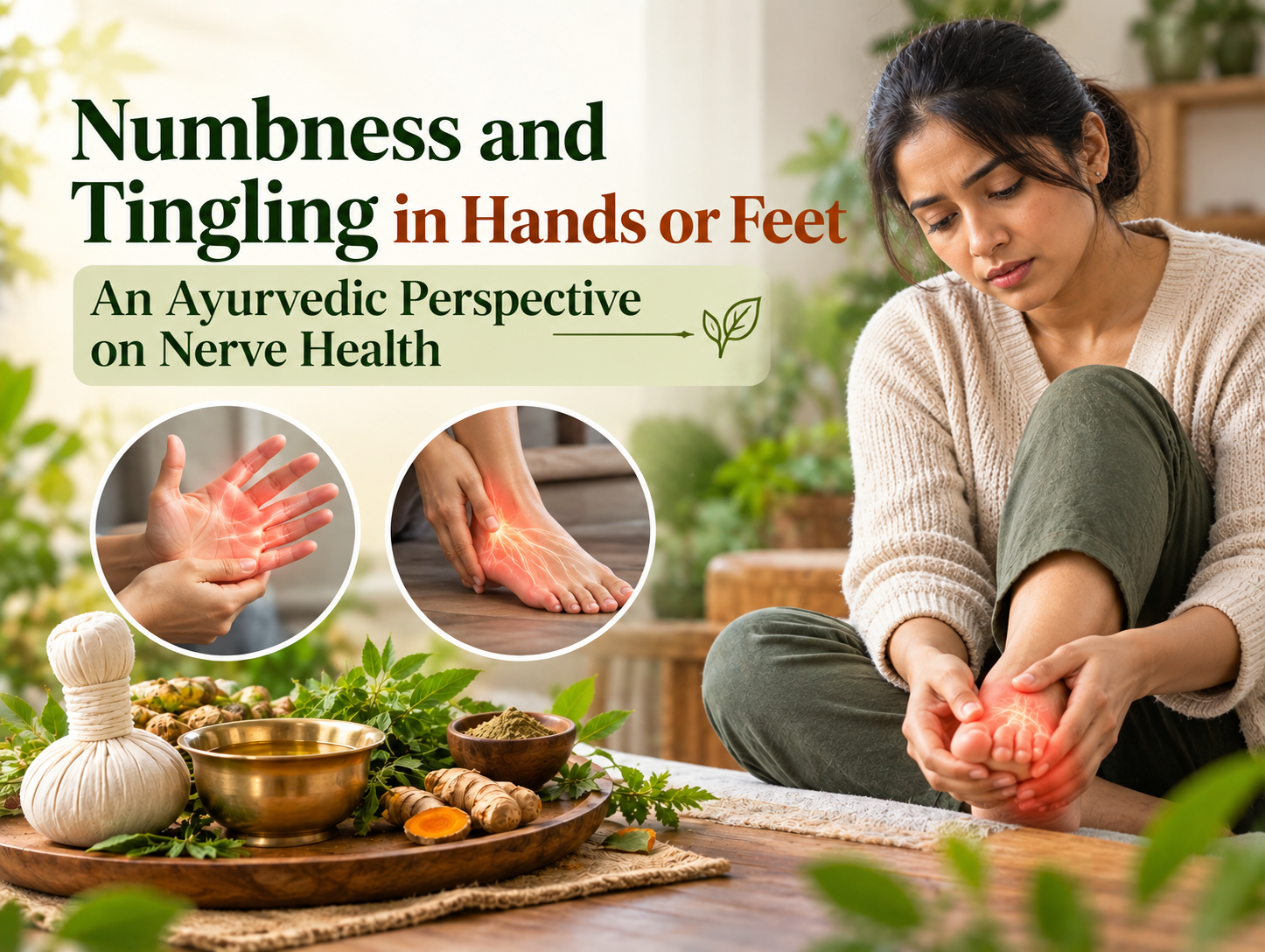
A tingling sensation in the fingers, numbness in the feet or the familiar feeling of “pins and needles” can sometimes occur simply because you have been sitting or sleeping in the same position for too long. But when these sensations occur repeatedly, last for longer periods or gradually become more noticeable, they may indicate an underlying issue affecting the nerves.
Modern medicine recognises several possible causes of numbness and tingling, ranging from nerve compression and vitamin deficiencies to diabetes and peripheral neuropathy. Ayurveda looks at these symptoms from a broader perspective, considering the balance of the Doshas, particularly Vata, along with circulation, digestion, lifestyle and the overall condition of the individual.
Understanding why these sensations occur is the first step towards choosing appropriate care.
Nerves carry messages between the brain, spinal cord and different parts of the body. When a nerve becomes compressed, irritated or damaged, normal sensation may be affected.
Depending on the underlying cause, a person may experience:
Pins and needles
Burning sensations
Reduced sensation
Numbness
Unusual sensitivity
Shooting or electric-like sensations
Muscle weakness
Difficulty with balance or coordination
Temporary tingling caused by pressure on a nerve usually improves after changing position. Frequent or persistent symptoms, however, deserve closer attention.
There is no single cause of numbness in the hands or feet. Some commonly recognised causes include:
Peripheral neuropathy occurs when nerves outside the brain and spinal cord become damaged or dysfunctional. Symptoms frequently begin in the feet or hands and may include numbness, tingling, burning sensations or weakness.
Persistently elevated blood glucose can damage peripheral nerves over time. This is known as diabetic neuropathy and commonly affects the legs and feet.
A compressed nerve in the neck, back, wrist or another area can produce tingling or numbness along the pathway of the affected nerve.
Deficiencies in certain nutrients, particularly vitamin B12, can sometimes contribute to neurological symptoms.
Spinal disorders, thyroid conditions, autoimmune diseases, infections, medication effects and several neurological conditions may also produce sensory changes.
Because the possible causes vary considerably, persistent symptoms should be properly evaluated rather than treated solely as a circulation problem.
Ayurveda traditionally associates Vata Dosha with movement, sensation, communication and many functions of the nervous system.
Vata has qualities traditionally described as light, dry, cold, subtle and mobile. When Vata becomes aggravated, Ayurvedic practitioners may consider symptoms involving altered sensation, dryness, variable discomfort, tremors, weakness or disturbed movement.
However, an Ayurvedic assessment does not assume that every episode of numbness is simply a “Vata problem”.
A practitioner may consider factors including:
The location and pattern of symptoms
Whether symptoms are constant or intermittent
Digestive health
Sleep patterns
Stress levels
Physical activity
Existing medical conditions
Age and constitution
Diet and daily routine
This individualised assessment helps determine which Ayurvedic approach may be appropriate.
Numbness is a symptom rather than a diagnosis.
For example, numbness caused by prolonged sitting is very different from numbness associated with diabetes, a compressed spinal nerve or a neurological condition.
Simply applying oil or taking herbal preparations without understanding the underlying problem may delay appropriate treatment.
People experiencing persistent neurological symptoms can learn more about the clinic's approach to Neurological Conditions, including peripheral neuropathy and other nerve-related concerns.
A combination of appropriate medical evaluation and individualised care is particularly important when symptoms are persistent or progressive.
Abhyanga, or therapeutic oil application, is commonly used in Ayurveda as part of certain Vata-focused care programmes.
Depending on the individual's condition, an Ayurvedic practitioner may select specific medicated oils and techniques. The intention may include supporting relaxation, comfort and mobility as part of a broader treatment plan.
However, the appropriate oil, frequency and method can vary significantly according to the condition.
People with reduced sensation, particularly those with diabetes, should be cautious with unsupervised heat or oil treatments because decreased sensation can make it harder to notice burns, injuries or skin problems.
In selected individuals, an Ayurvedic physician may consider specific Panchakarma or traditional therapeutic procedures based on the person's health, strength and underlying condition.
Ayurvedic treatment is not based solely on the name of a symptom. The practitioner considers factors such as Dosha involvement, digestive function, tissue health, lifestyle and the nature of the neurological complaint before recommending therapies.
Not every individual with tingling or numbness requires Panchakarma. Treatment should therefore be personalised rather than selected from a general list of therapies.
Ayurveda places considerable importance on digestion and appropriate nourishment.
Rather than recommending one universal diet for nerve health, an Ayurvedic approach considers the individual's digestive capacity, constitution, health conditions and current symptoms.
From a general health perspective, a balanced diet that provides adequate protein, vitamins, minerals and other essential nutrients is important for normal nerve function.
If a nutritional deficiency is suspected, laboratory testing and appropriate medical advice may be necessary instead of relying solely on dietary assumptions.
Dinacharya, or maintaining a structured daily routine, is an important Ayurvedic concept.
Irregular sleeping patterns, excessive physical strain, prolonged inactivity and inconsistent eating habits may affect overall wellbeing. Ayurveda therefore encourages an appropriate and sustainable routine.
Helpful everyday habits may include:
Maintaining regular sleep and wake times
Eating meals at reasonably consistent times
Including appropriate physical movement
Avoiding prolonged periods in one position
Taking breaks when working at a desk
Managing excessive stress
Following prescribed treatment for existing medical conditions
Small habits performed consistently can be more sustainable than making several major changes at once.
People living with diabetes should pay particular attention to numbness or reduced sensation in their feet.
Reduced sensation may make it difficult to notice small cuts, blisters, pressure injuries or infections. Regularly checking the feet and maintaining appropriate diabetes care can therefore be particularly important.
New or worsening numbness should be discussed with a healthcare professional so that possible diabetic neuropathy and other causes can be evaluated.
Not every tingling sensation is an emergency. However, sudden numbness can sometimes be associated with a serious neurological problem.
Seek urgent medical attention if numbness develops suddenly, particularly when accompanied by:
Weakness or paralysis on one side
Facial drooping
Difficulty speaking or understanding speech
Sudden loss of balance or coordination
Severe unexplained headache
Vision changes
Confusion
Loss of bladder or bowel control
Significant weakness following a neck or back injury
These symptoms should not be treated at home or managed solely through Ayurvedic remedies.
Occasional pins and needles after sitting in an awkward position are common. Repeated numbness, burning or tingling in the hands or feet is different and deserves proper attention.
Ayurveda provides an individualised perspective on nerve-related symptoms by considering Vata, daily routine, digestion, lifestyle and overall health. At the same time, modern diagnostic evaluation can help determine whether symptoms are related to diabetes, nutritional deficiency, nerve compression, peripheral neuropathy or another neurological condition.
Combining appropriate diagnosis with personalised lifestyle and supportive Ayurvedic care can provide a more responsible approach to long-term neurological wellbeing.
If numbness, tingling or other nerve-related symptoms continue to affect everyday activities, personalised evaluation can help determine an appropriate care plan at Dr. Raniya Sulthana Ayurveda Multi-Speciality Clinic.
First Floor, Somanathapuram, Door No 4, 11B, Paper Mills Road, near Square Brothers Xerox, Kolathur, Tamil Nadu 600099.
First Floor, 241, Poonamallee High Rd, Maduravoyal, Chennai, Tamil Nadu 600095.
No. 63, HIG1, Ground Floor, Mogappair West Main Road, Nolambur, Chennai, Tamil Nadu 600037.

Copyrights All Rights Reserved Dr. Raniya Sulthana Ayurveda Multispeciality Clinic | Website Designed & Developed By GlintCreatives.com