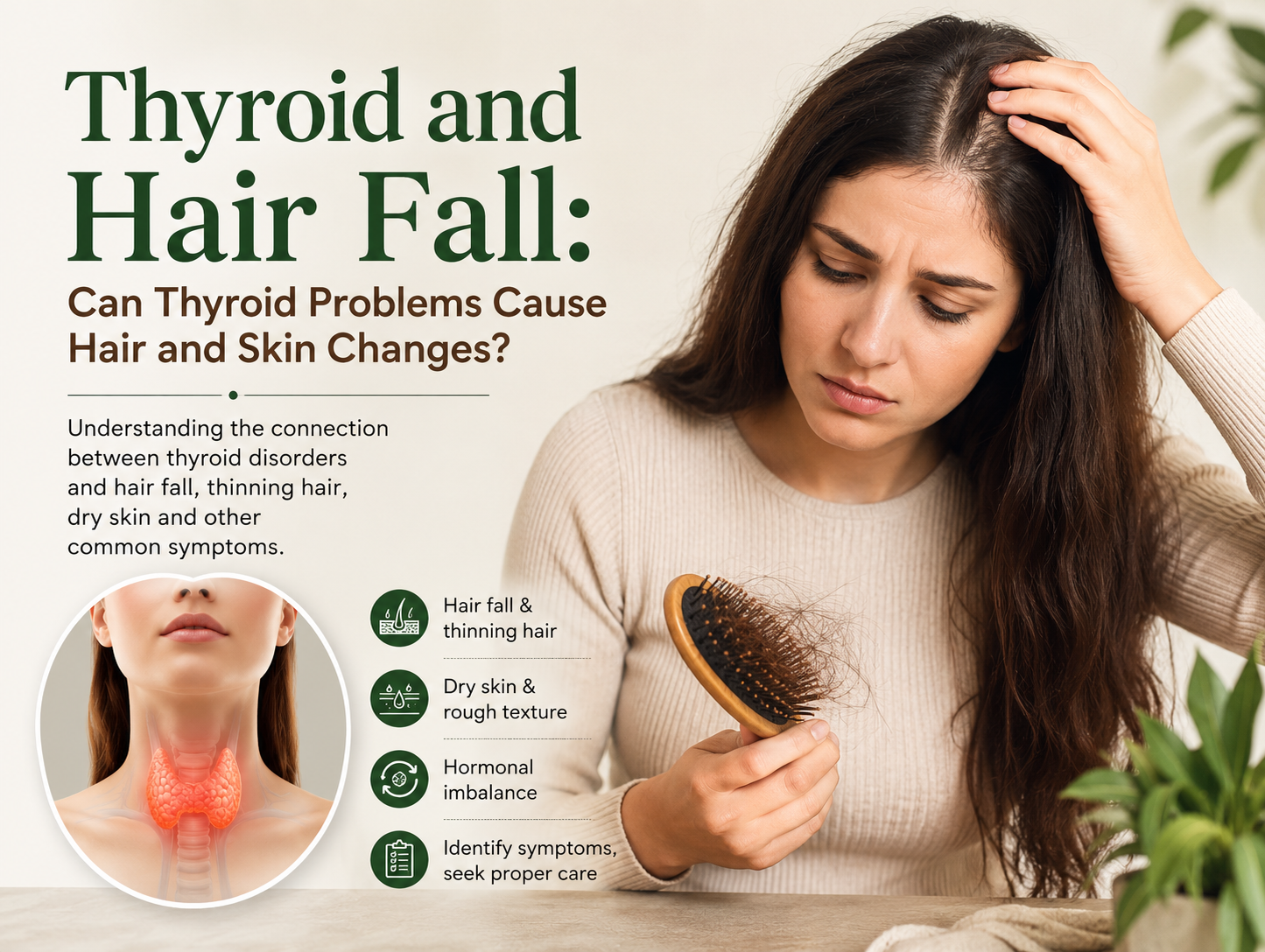
Hair fall, dry skin and changes in hair texture are common concerns that can affect people of all ages. While stress, nutritional deficiencies, ageing, hormonal changes and lifestyle factors can contribute to these changes, thyroid disorders can also play a role.
The thyroid gland produces hormones that help regulate metabolism, energy use and several important body functions. When thyroid hormone levels are too low or too high, changes can occur in different parts of the body, including the skin and hair.
Understanding this connection can help you recognise when persistent hair or skin changes may need professional evaluation.
Thyroid hormones influence the body's metabolism and the normal functioning of many tissues. When thyroid function is disrupted, the normal growth and renewal cycles of hair and skin may also be affected.
An underactive thyroid, known as hypothyroidism, may be associated with dry skin, dry or coarse hair and hair thinning or loss. An overactive thyroid, or hyperthyroidism, can also cause hair thinning or increased hair shedding in some people.
However, experiencing hair fall or dry skin does not necessarily mean that you have a thyroid disorder. These symptoms can occur for many different reasons.
Hair naturally goes through different stages of growth and shedding. Thyroid hormone imbalance can interfere with the normal hair cycle in some people, potentially leading to increased shedding or thinning.
When thyroid hormone production is insufficient, some people may experience:
Hypothyroidism may also cause fatigue, feeling unusually cold, constipation, weight gain and difficulty concentrating.
An overactive thyroid can also affect the hair. Some people may experience:
Hyperthyroidism may also be associated with symptoms such as heat intolerance, excessive sweating, anxiety, tremors, increased heart rate and unintentional weight loss.
Yes, particularly in people with an underactive thyroid.
Hypothyroidism can be associated with dry or coarse skin. Reduced thyroid hormone activity may affect processes involved in maintaining normal skin function, which can contribute to dryness.
Some people may notice:
Hyperthyroidism, on the other hand, may be associated with warm, moist skin and increased sweating rather than the dryness commonly associated with hypothyroidism.
Hair fall or dry skin becomes more relevant when it occurs together with other persistent symptoms.
These symptoms are not exclusive to thyroid disorders. A proper medical assessment is necessary to identify the underlying cause.
Thyroid disorders are only one possible contributor to hair loss. Other factors can include:
Because hair loss has many possible causes, identifying the underlying reason is important rather than assuming that thyroid imbalance is responsible.
If your primary concern is persistent hair fall or dandruff, you can also explore our Ayurvedic Hair Fall & Dandruff Treatment in Chennai for information about hair and scalp care.
If hair fall or skin changes continue for several weeks or occur along with other symptoms associated with thyroid disorders, it is worth discussing them with a qualified healthcare professional.
A healthcare professional may review your symptoms and medical history and recommend appropriate thyroid testing when necessary. Thyroid symptoms can overlap with several other conditions, so diagnosis should not be based on hair or skin changes alone.
You should particularly consider seeking professional advice if you notice:
Ayurveda takes a holistic approach to health and considers digestion, lifestyle, sleep, stress and individual constitution as interconnected aspects of well-being.
From an Ayurvedic perspective, hair and skin health are not considered in isolation. An Ayurvedic physician may assess an individual's Prakriti, lifestyle, dietary habits, digestion and other factors before recommending personalised care.
Depending on the individual's condition, Ayurvedic care may include appropriate dietary guidance, lifestyle recommendations, herbal preparations and therapies selected by a qualified practitioner.
The objective is to support overall well-being while addressing the individual's specific health concerns.
Ayurvedic care may be considered as part of a personalised approach to overall wellness in people with thyroid and hormonal concerns.
At Dr. Raniya Ayurveda, thyroid and hormonal disorders are among the conditions for which personalised Ayurvedic care is provided. The approach considers the individual's symptoms, lifestyle and overall health rather than focusing on a single symptom.
If you are already taking thyroid medication, do not stop, reduce or change your prescribed medicine without consulting your treating doctor. Any complementary treatment should be discussed with your healthcare professionals.
While lifestyle changes cannot replace appropriate treatment for a thyroid disorder, healthy daily habits can support general well-being.
Adequate nutrition is important for healthy hair and skin. Include a variety of vegetables, fruits, whole grains, protein sources and healthy fats according to your dietary requirements.
If you suspect a nutritional deficiency, consult a healthcare professional before taking supplements.
Long-term stress can affect overall well-being and may contribute to hair shedding in some people. Practices such as gentle yoga, meditation, breathing exercises and regular relaxation may help support stress management.
Adequate sleep supports general health and recovery. Try to maintain regular sleeping and waking times.
Avoid excessive heat styling, tight hairstyles and frequent chemical treatments if your hair is already weak or shedding.
Regular scalp hygiene can help maintain a healthy scalp environment. Choose hair-care products appropriate for your scalp type and avoid harsh products if they cause irritation.
Persistent hair fall or changes in skin texture should not be ignored, particularly when they occur alongside fatigue, weight changes, temperature sensitivity, menstrual changes or other symptoms.
Early evaluation can help identify whether thyroid dysfunction or another underlying condition may be contributing to the problem.
For people looking for a holistic approach to thyroid and hormonal wellness, Thyroid & Hormonal Disorders treatment at Dr. Raniya Sulthana Ayurveda Multi-Speciality Clinic can provide personalised Ayurvedic guidance based on individual health needs.
Thyroid hormones influence many functions throughout the body, and thyroid disorders can be associated with noticeable changes in hair and skin. Hair fall, thinning hair, dry skin and changes in hair texture may occur with thyroid dysfunction, but they can also result from many other factors.
If these changes are persistent or accompanied by other symptoms, professional evaluation is important. Once the underlying cause is understood, an appropriate care plan can be developed.
With proper guidance, balanced nutrition, healthy lifestyle habits and personalised care, you can take a more informed approach to maintaining your overall thyroid, hair and skin health.
For personalised Ayurvedic guidance for thyroid and hormonal concerns, consult Dr. Raniya Sulthana Ayurveda Multi-Speciality Clinic.
First Floor, Somanathapuram, Door No 4, 11B, Paper Mills Road, near Square Brothers Xerox, Kolathur, Tamil Nadu 600099.
First Floor, 241, Poonamallee High Rd, Maduravoyal, Chennai, Tamil Nadu 600095.
No. 63, HIG1, Ground Floor, Mogappair West Main Road, Nolambur, Chennai, Tamil Nadu 600037.

Copyrights All Rights Reserved Dr. Raniya Sulthana Ayurveda Multispeciality Clinic | Website Designed & Developed By GlintCreatives.com